The 500 acres of recreational land proposed for a $10 billion data center development is less than two miles from residential areas and the City of Page. Photo by Beth Henshaw

Dispatch from Page

Navajo Nation Leaders Oppose Data Center in Page, Arizona

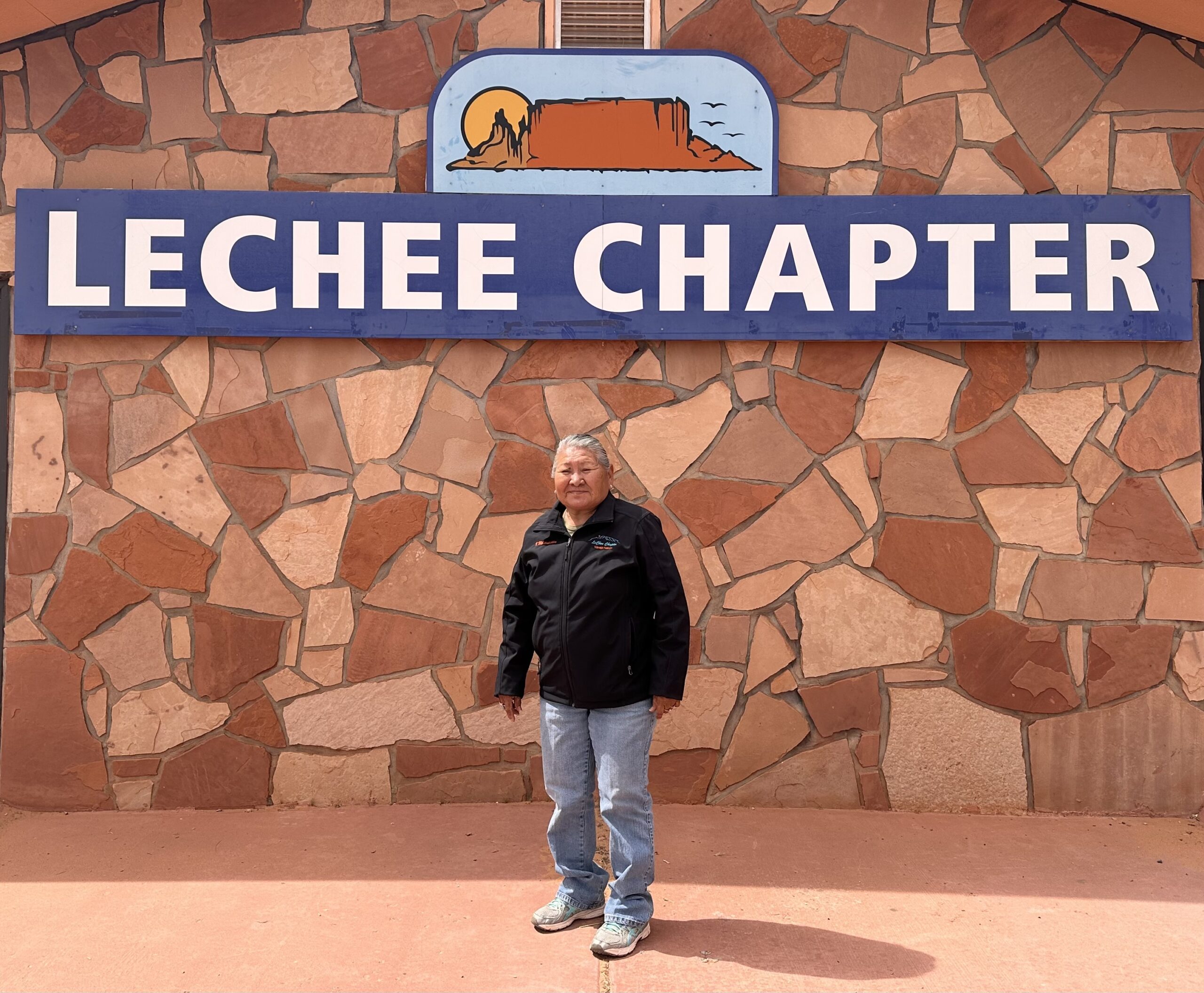
A man stands in front of a stone wall with the words "Lechee Chapter."
Irene Whitekiller, LeChee Chapter President, standing in front of the LeChee Chapter House. The LeChee Chapter of the Navajo Nation voted unanimously in February to pass a resolution opposing the City of Page’s decision last year to sell 500 acres of recreational land for a $10 billion data center development. The proposed development site borders the LeChee Chapter, a home to the internationally popular tourist destination of Antelope Canyon. Photo by Beth Henshaw
A woman with pink hair and a pink puffy yales a selfie in front of a washed out waterway with a desert background.

by Beth Henshaw – 05.06.2026 – 5 min. read

The LeChee Chapter of the Navajo Nation voted unanimously in February to pass a resolution opposing the City of Page’s decision last year to sell 500 acres of recreational land for a $10 billion data center development.

The proposed development site borders the LeChee Chapter, a home to the internationally popular tourist destination of Antelope Canyon. Chapters are political subdivisions of the Navajo Nation that operate on a democratic basis.

“People come to visit for the beauty,” said LeChee Chapter President Irene Whitekiller. “We just want nature, the land, and water. We don’t need a data center.”

LeChee resident Teyana Begay staged protests in Page opposing the data center and said, “Not only will the data center destroy native plants, it will destroy memories we have on this land, which we use to ride horses, dirt bikes, quads, and walk our dogs.”

The resolution states that “the lack of transparency from the City of Page about risks of harm and environmental impact on Navajo people is not being considered in this business transaction.” 

Residents and chapter leaders worry that the data center will draw water from Page’s water system, which comes from the shrinking Lake Powell, or tap into sparse groundwater sources. 

“Our people, from LeChee east to highway 98, we live without water, we live without electricity,” Whitekiller said.

Navajo Safe Water, a multi-agency coalition, estimates  37,000 people on the Navajo Nation, including many LeChee residents, live without piped water in their homes. 

Page is surrounded by Navajo Nation to the east and south, and residents from towns like Gap, LeChee, and Kaibito, drive to Page to haul water from the Marathon gas station. 

“Hauling water is hard on vehicles, especially for residents who have to drive up to 60 miles on sandy roads,” Whitekiller said. 

As of April 2026, Lake Powell is 23% full, and Glen Canyon Dam’s operators plan to stem releases and draw from upstream reservoirs to keep the reservoir from dropping below minimum power pool, when the dam would no longer be able to produce electricity.

Page’s city website says that “no water source has been identified,” and “the developer is responsible for securing a water supply.” 

The data center operator’s identity is obscured by a non-disclosure agreement, but the developer is a U.K. company, Huntley LLC. In a public presentation, the firm said, “We want to be good neighbors.” 

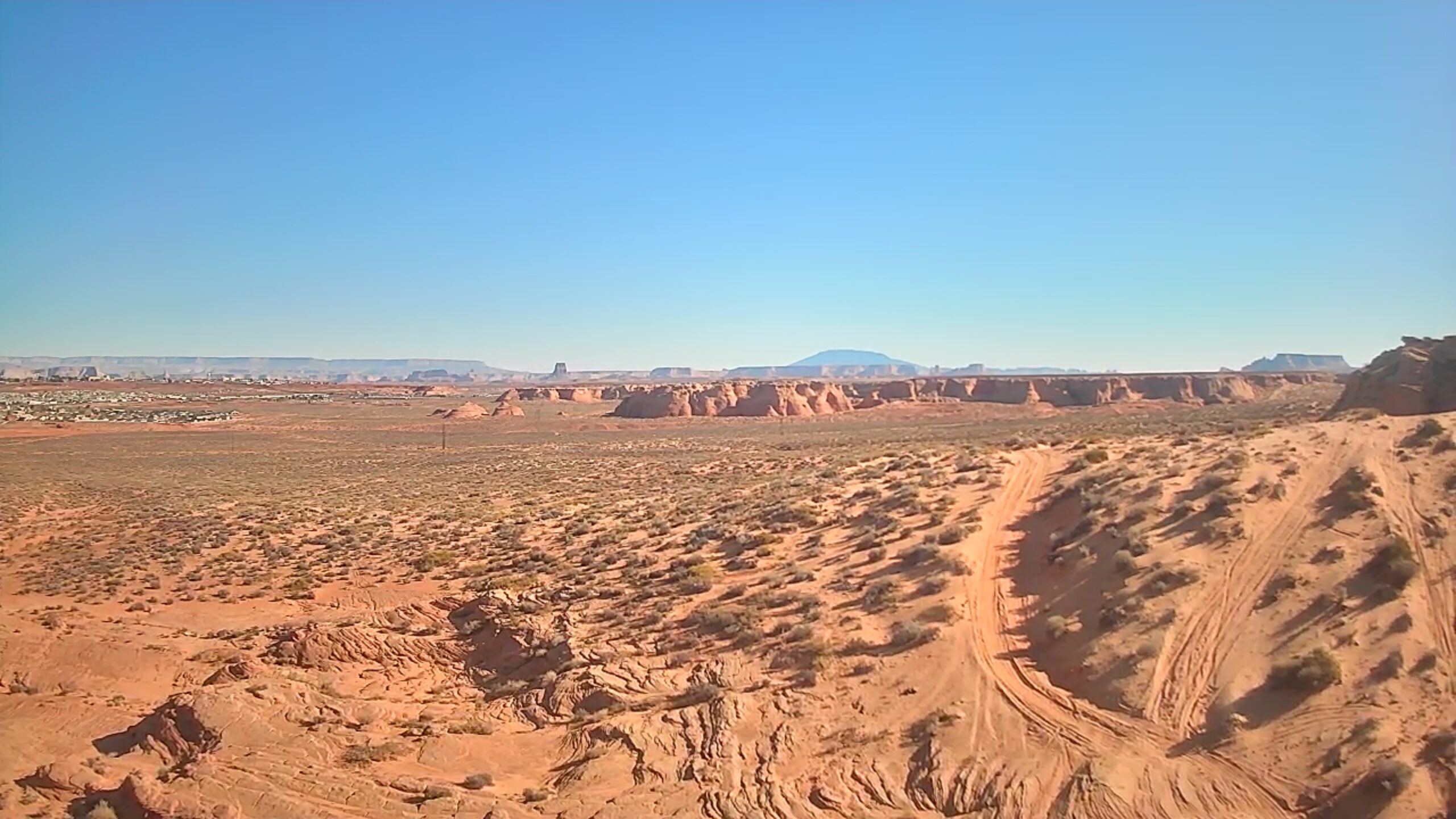
Aerial image of a red rock desert with dirt roads running through it.
Aerial image of the 500 acres of recreational land proposed for a $10 billion data center development near Page, Arizona. Photo by Beth Henshaw

But neither the firm nor Page officials consulted with or informed LeChee residents and leaders about the project. LeChee residents found out through Facebook posts and Page residents reaching out. The chapter’s resolution also states that “officials have attempted to get further information and have not been met with favor nor any answers to requests.” 

Nor did the city consult with the Navajo Nation, even though the parcel lies just outside its boundaries. Page’s website justifies this by saying that since the potential project area is located entirely within the city’s boundaries and jurisdiction, “no separate governmental approvals or consultations outside the City’s jurisdiction were required as part of that action.”

Relations between the City of Page and Navajo Nation have a long history of strain. 

Until the 1950s, the current land on which Page sits was within the Navajo Nation. “It was quiet and peaceful. People moved their livestock here, camped out, and used the water,” said Whitekiller. In 1958, the Bureau of Reclamation gave the Navajo Nation a tract of land in southeastern Utah in exchange for the 24-square-mile parcel in Arizona that would become the site for Glen Canyon Dam and Page.

The settlement was constructed rapidly to house workers on the dam and over time became the gateway community for Glen Canyon National Recreation Area and Lake Powell. But it is also a reservation border town and has been plagued with some of the same problems. 

In 2002, the Equal Employment Opportunity Commission sued current Mayor Steve Kidman and his father, Richard Kidman, for prohibiting Navajo employees from speaking their native language at the Kidmans’ restaurant, R&D’s. The Court ordered the Kidmans to rescind the English language policy and prohibited them from engaging in further discrimination or retaliation. 

The opposition to the data center in Page is part of a wider backlash against AI and the server farms that power it. From Tucson, to Virginia, to Maine, residents have pushed back against the facilities’ outsized water and power use, the effect on utility rates, and noise, light, and air pollution from the buildings themselves. And, once the infrastructure is in place, the centers offer a relatively small number of permanent jobs. According to Bloomberg, about half of the data centers slated to open in the US in 2026 will either face delays or cancellations due to supply chain issues and public opposition.

In Oregon, residents of Morrow and Umatilla counties filed a class action lawsuit against Amazon alleging the water used to cool their data center contaminated the groundwater with toxic levels of nitrate, which has been linked to rare cancers and increased miscarriages. Amazon denied the allegations, but agreed to pay a $20.5 million settlement to residents this spring.

What kind of illnesses will the data center bring?” Whitekiller wondered. “Our people are dying from cancer and dementia. We suffer birth defects because uranium mines on our lands have never been cleaned up.”

On March 25, 2026 Senator Bernie Sanders (I-Vt.) and Rep. Alexandria Ocasio-Cortez (D-N.Y.) introduced the Artificial Intelligence (AI) Data Center Moratorium Act, legislation that would pause the development of AI and new data centers to ensure the safety of humanity.

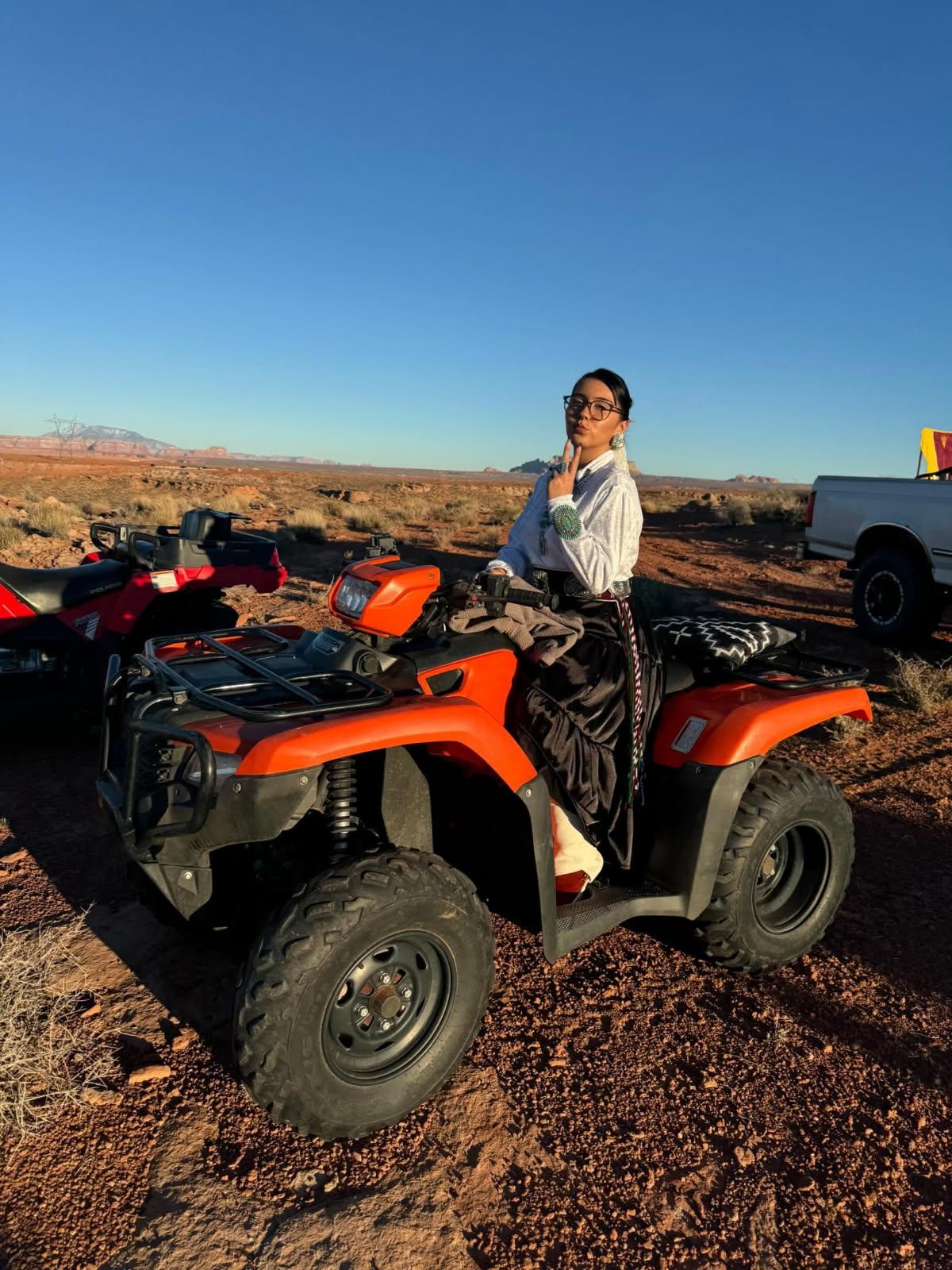
A young girl posing on an ATV in a desert landscape.
LeChee resident Teyana Begay riding a quad from LeChee to the recreational land at risk from a proposed land sale for a $10 billion date center near Page, Arizona. Begay staged protests in Page opposing the data center and said, “Not only will the data center destroy native plants, it will destroy memories we have on this land, which we use to ride horses, dirt bikes, quads, and walk our dogs.” Photo by Beth Henshaw

“We have seen ICE partner with AI companies to surveil Americans, social media users employ AI bots to create sexually explicit deepfakes of women and children, and data center construction inflate electric bills in communities across the country. And all of this harm has occurred because of the absence of federal legislation to regulate AI,” Ocasio-Cortez said.

Indigenous leaders across the nation are at the forefront of the data center opposition movement. The Seminole Nation of Oklahoma just became the first tribe in the United States to unanimously pass a moratorium on data center development within its jurisdiction

“My hope, my prayer, is that the stance we’ve taken will serve as a catalyst for all Indigenous communities to provide resistance to any kind of extractive developments that will harm their people, their communities, and this Earth,” said Mekusukey Band Representative Glen Chebon Kernell, who introduced the resolution. 

Navajo Nation communities Coppermine and Kaibito passed resolutions similar to LeChee’s opposing the data center development in Page.

Honor the Earth, a non-profit organization dedicated to Indigenous environmental justice, launched the No Data Center Coalition to track and oppose data centers built on or near native land. 

According to the coalition’s website, “These companies target our resilient lands because they believe rural, coal-dependent communities lack the political power and financial resources to fight back. They bank on us being divided and overlooked. Data centers are the next frontline of water protection.”

A woman with pink hair and a pink puffy yales a selfie in front of a washed out waterway with a desert background.Beth Henshaw is a writer and outdoor educator based in Page, Arizona. She is pursuing her M.F.A. in creative nature writing at Western Colorado University and publishes regularly on her blog www.empathic-adventurers.com. Her videos and repeat photography of Lake Powell’s fluctuating lake levels have reached over 30 million views on her Instagram (@blog_by_Beth).



Leave a Comment

Your email address will not be published. Required fields are marked *

Scroll to Top

Subscribe Now

Become a subscriber and be the first to know when new articles are released and to hear the latest Corner Post news!