Dispatch from Page
Citizens in Page, Arizona Continue to Protest Data Center Development
by Beth Henshaw – 02.05.2026 – 5 min. read
A citizen-led effort to block a land-sale to a data center developer in Page, Arizona, was rejected on a technicality, but residents continue to oppose the land sale and proposed facility through protest, public records requests, and by attending city council meetings.
In October of last year, the Page City Council voted to sell 500 acres of recreational land less than five miles from Horseshoe Bend to a U.K. company, Huntley LLC, for a $10 billion data center. Data centers are the physical buildings that store cloud data, process cryptocurrency and run artificial intelligence, and can consume huge amounts of power and water for cooling.
Citizens filed a referendum aimed at overturning the city vote in November. The referendum needed 303 signatures to bring the issue to a ballot vote. More than 400 signatures were collected, but the city clerk disqualified all of them due to a technicality: the land sale ordinance was not stapled to the petition pages and the referendum number was written on the front, but not on the back. Land sale opponents said the city failed to provide adequate guidance. “It’s ridiculous that the city wouldn’t provide a sample referendum and give clear instructions on how to fill it out,” Sharon Woodard, a Page resident since 1976, said.
A packet was distributed to members of P.A.G.E., the political action committee that filed the referendum, with a link to Arizona.gov’s sample referendum page which came up with an error code that read: “The document you are trying to access is outdated. There currently isn’t a replacement.”
A public records request turned up emails between Huntley LLC, Page’s mayor, Steve Kidman, and Page’s city manager, Darren Caldwell, revealing that Caldwell signed a non-disclosure agreement (NDA) in January 2025 before he left his position as city manager. Joshua Smith, the city attorney, also signed the NDA. While it’s legal for city staff to sign a NDA, it often goes against public transparency laws.
“The city has worked to protect the developer’s privacy at the expense of informing citizens,” Hunter Kennedy, a concerned citizen who filed the public record request, said. Huntley LLC is operating as the “middle man,” and the NDA obscures who wants to build the data center. Tech companies like Amazon, Google, OpenAi, and Meta are known to use NDAs in data center developments.
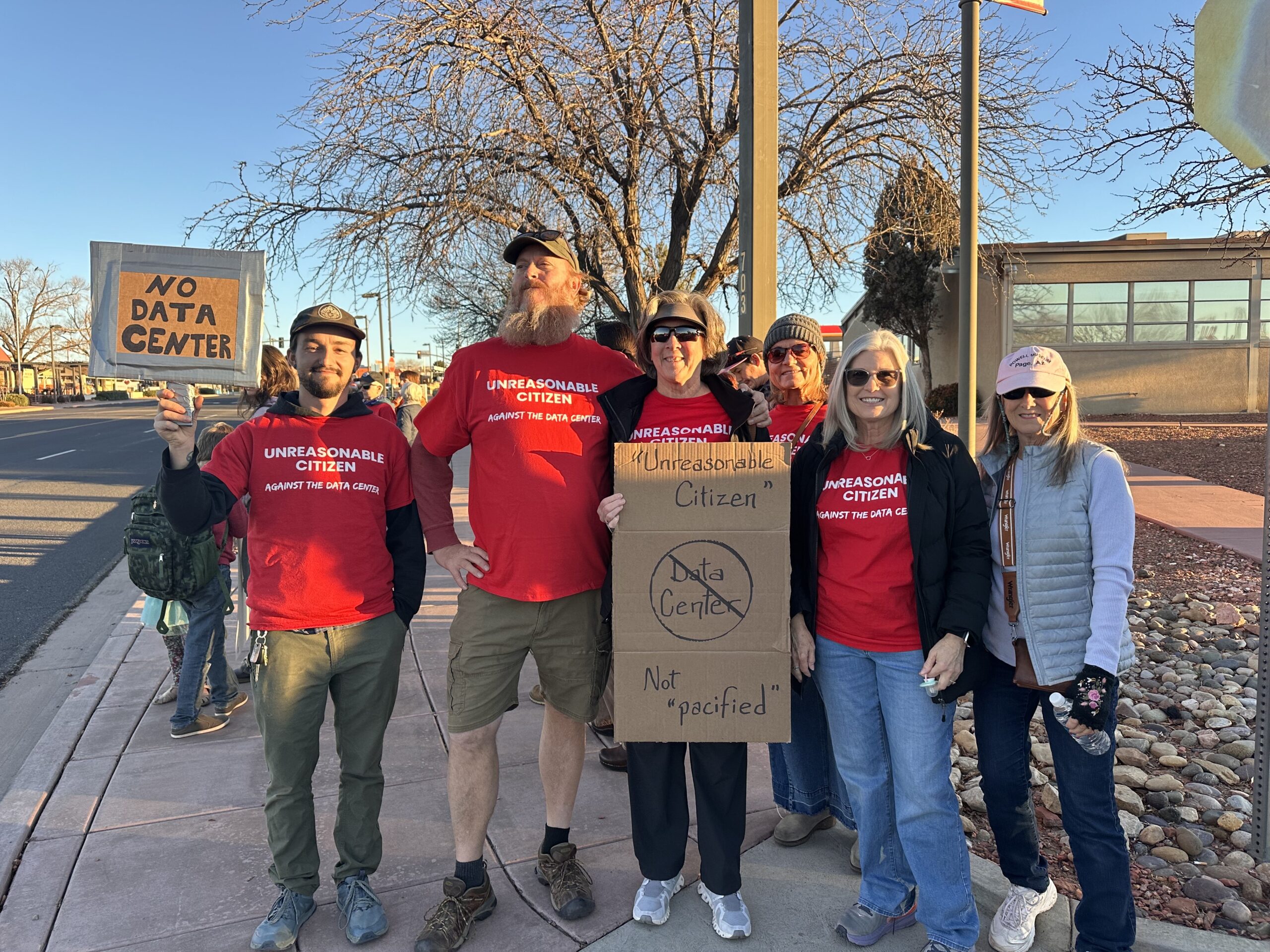
Page residents learned about the data center development eight months after the NDA was signed. Page’s Mayor, Steve Kidman, coordinated with Huntley LLC to provide one public engagement session in September 2025. Kidman wrote in an email to Huntley LLC, “There is a very vocal and growing group who are opposed to this project. I would like to request certain details be included in your presentation. I’m confident all but the most unreasonable citizens would be pacified if specific concerns were adequately addressed.”
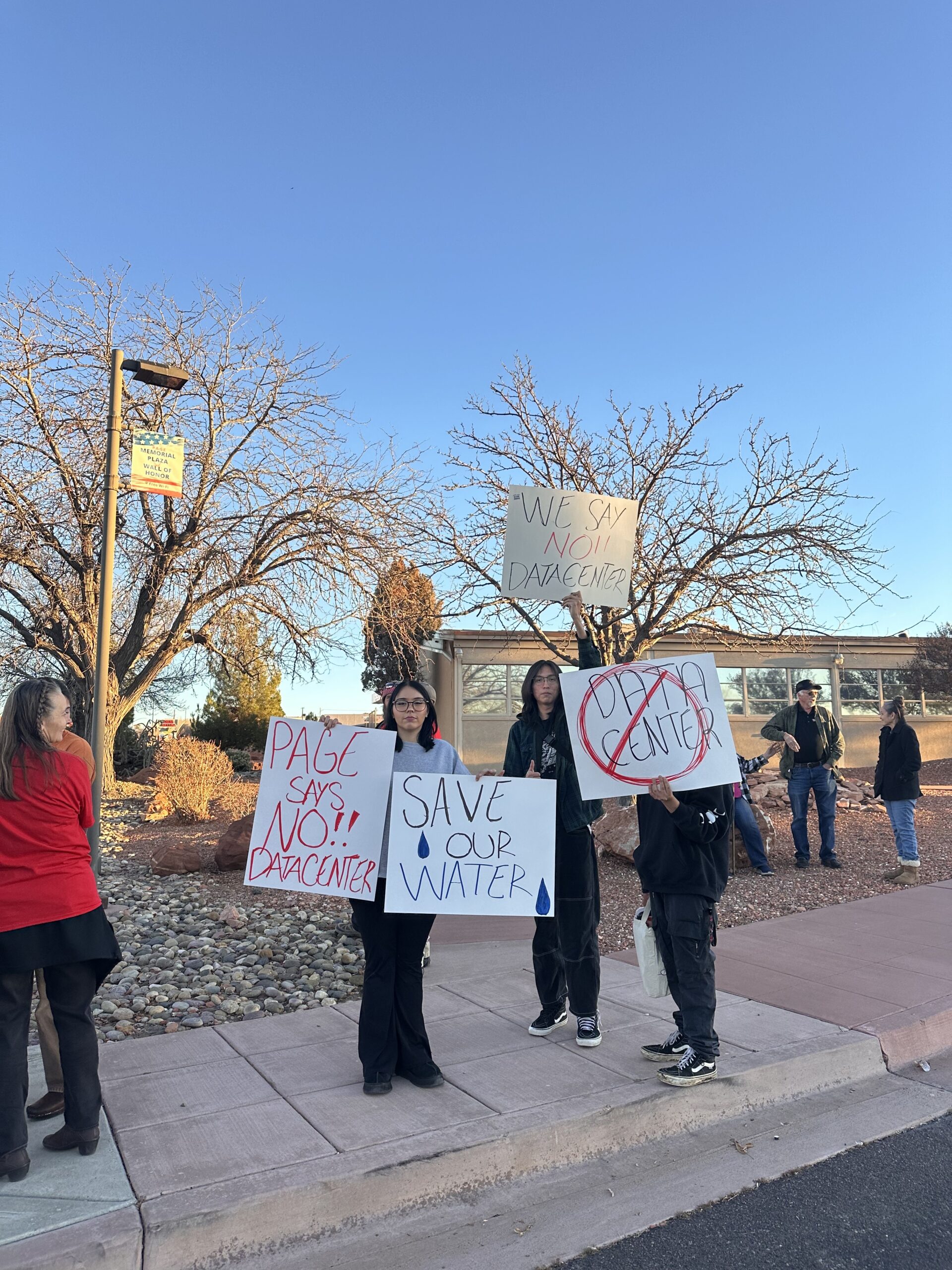
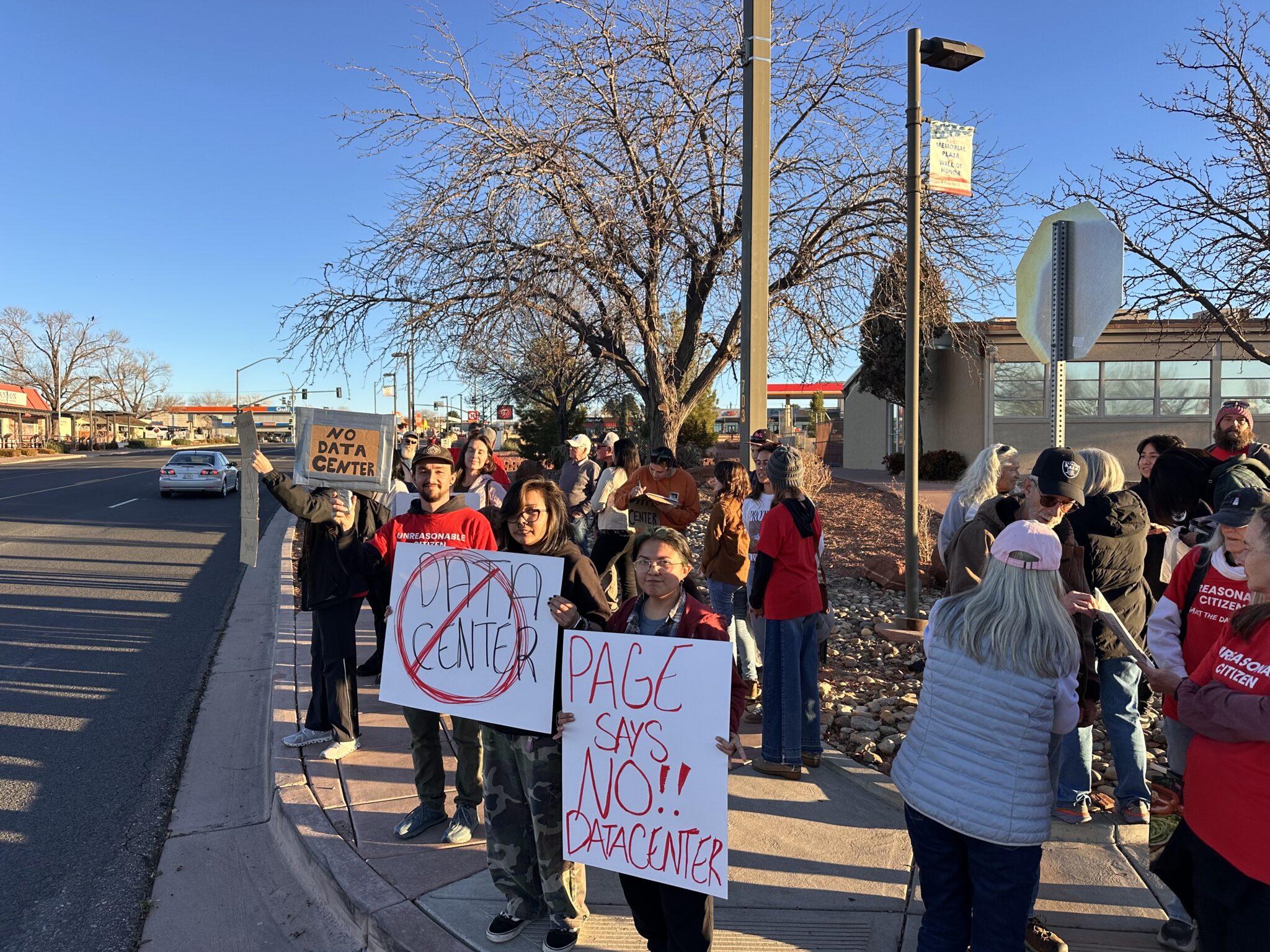
Citizens asked questions about water usage, power usage, job creation, infrastructure, and environmental impacts, but no concrete answers were provided at the time. Page residents staged a protest in January 2026 to oppose the land sale, non-disclosure agreement and the data center construction, wearing t-shirts that said, “Unreasonable Citizens Against the Data Center.”
“It is disappointing to know that Kidman and City Councilor Mike Farrow’s minds have been made up for months and the presentation was a fake show of public engagement,” Kennedy said.
Emails from the public records request revealed the developer plans to build fifteen, thirty-foot-high buildings. The proposed power usage is 14 TWh/year, which is about 4.3 times what the Glen Canyon Dam produced in 2023, so the developer may seek additional land for a gas or solar plant to power the data center.
Opposition to data center developments are growing nationwide. Over 230 environmental groups signed and sent a letter to Congress asking for a nationwide moratorium ban on new data center construction, stating that “the rapid expansion of data centers across the United States, driven by the generative artificial intelligence (AI) and crypto boom, presents one of the biggest environmental and social threats of our generation.” The letter shared that data centers are contributing to climate change and found that fifty-six percent of the electricity used to power data centers is sourced from fossil fuels, as well as soaring electricity rates which have “increased 21.3 percent from 2021 to 2024 driven largely by the rapid build-out of data centers.”
Despite public outcry, city council members do not appear to be changing their minds.
In a Facebook post, City Councilor Debi Roundtree stated, “The board has not been hiding information. Misinformation spread online has little factual basis. The potential for the data center to bring in millions of dollars in tax revenue could greatly benefit the City of Page.”
However, Arizona has offered tax incentives to data centers developers since 2013, exempting owners and operators from transaction privilege and use taxes. The Arizona Department of Revenue estimates the incentives lose the state about $38 million a year.
It’s possible those tax exemptions could change due to public opposition.
In January 2026, Arizona state Rep. Neal Carter, a Republican from the 15th legislative district, introduced House Bill 2119 to end the state’s tax incentives for data center developments this year, instead of its current expiration date in 2033.
“The people in my district don’t like (data centers), and they’re popping up here,” said Carter. “If they want to build them, fine, but why should the state be subsidizing it?”
Arizona Gov. Katie Hobbs, a Democrat, also proposed in her 2026 executive budget plans to eliminate the state’s data center tax exemption, but the legislature has not yet voted on it.
On top of the tax incentives, data center developer Novva stated that Arizona is “one of the few places where you can build big and sleep soundly” due to the low risk of natural disasters such as hurricanes, tornados, and earthquakes.
The next step for public input for Page citizens will be in the rezoning process, as the land is currently designated as recreational and will need to be re-zoned in order for the developers to build. According to the City of Page, if the rezoning process fails, the land will revert back to the City of Page.
“When will the city listen to its citizens without it needing to escalate to a legal action?” Kennedy wondered.

Republish
Republish Our Content
Corner Post's work is available under a Creative Commons License and under our guidelines:
- You are free to republish the text of this article both online and in print (Please note that images are not included in this blanket licence as in most cases we are not the copyright owner) but:
- you can’t edit our material, except to reflect relative changes in time, location and editorial style and ensure that you attribute the author, their institute, and mention that the article was originally published on Corner Post;
- if you’re republishing online, you have to link to us and include all of the links in the story;
- you can’t sell our material separately;
- it’s fine to put our stories on pages with ads, but not ads specifically sold against our stories;
- you can’t republish our material wholesale or automatically—you need to select stories to be republished individually;
- you have to credit us, ideally in the byline; we prefer “Author Name, Corner Post,” with a link to our homepage or the article; and
- you have to tag our work with an editor’s note, as in “This article was paid for, developed, and originally published by Corner Post. Corner Post is an independent, nonprofit news organization. See cornerpost.org for more.” Please, include a link to our site and our logo. Download our logo here.
Beth Henshaw is a writer and outdoor educator based in Page, Arizona. She is pursuing her M.F.A. in creative nature writing at Western Colorado University and publishes regularly on her blog www.empathicadventurers.com. Her videos and repeat photography of Lake Powell’s fluctuating lake levels have reached over 30 million views on her Instagram (@blog_by_Beth).

1 thought on “Citizens in Page, Arizona Continue to Protest Data Center Development”
No data center ‼️‼️‼️‼️‼️🪶🐢
NO MEANS NO‼️‼️‼️